SAP Value Analysis
Designing the decision framework that enables organizations to quantify, prioritize, and act on value across complex process landscapes.
Enterprise and mid-market customers operating at global scale · 1M+ users · 78 countries





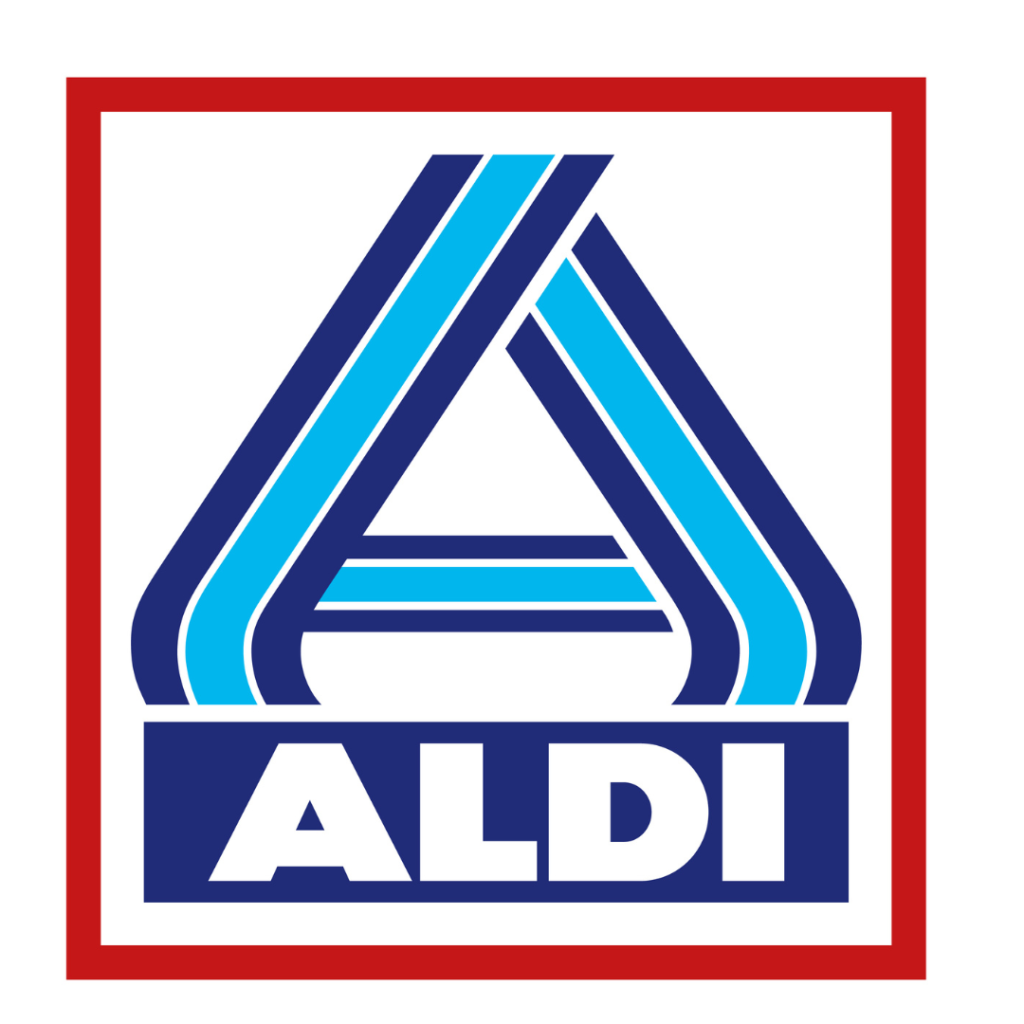
Customers could identify opportunities, but lacked a consistent way to quantify their impact. Insights were disconnected from value, forcing teams to rely on manual assumptions, fragmented business cases, and subjective prioritisation.
This resulted in:
- Slow translation from insight to action
- Inconsistent value assessment across teams
- Missed or underestimated improvement potential
The core challenge was not insight generation, but operationalising insights into trusted, comparable business decisions at scale.
Navigating Ambiguity & Strategic Alignment
At the outset, the problem space lacked a shared definition of value, creating high decision risk and slow alignment across teams. Rather than progressing directly into solution design, I initiated a Design Sprint to align stakeholders around a single, testable value model before committing engineering effort.
The sprint reframed initiatives as explicit hypotheses, shifting discussions from opinion-driven debate to projected business impact. Through facilitated workshops and structured synthesis, we established a shared understanding of what constituted meaningful value and how it could be measured.
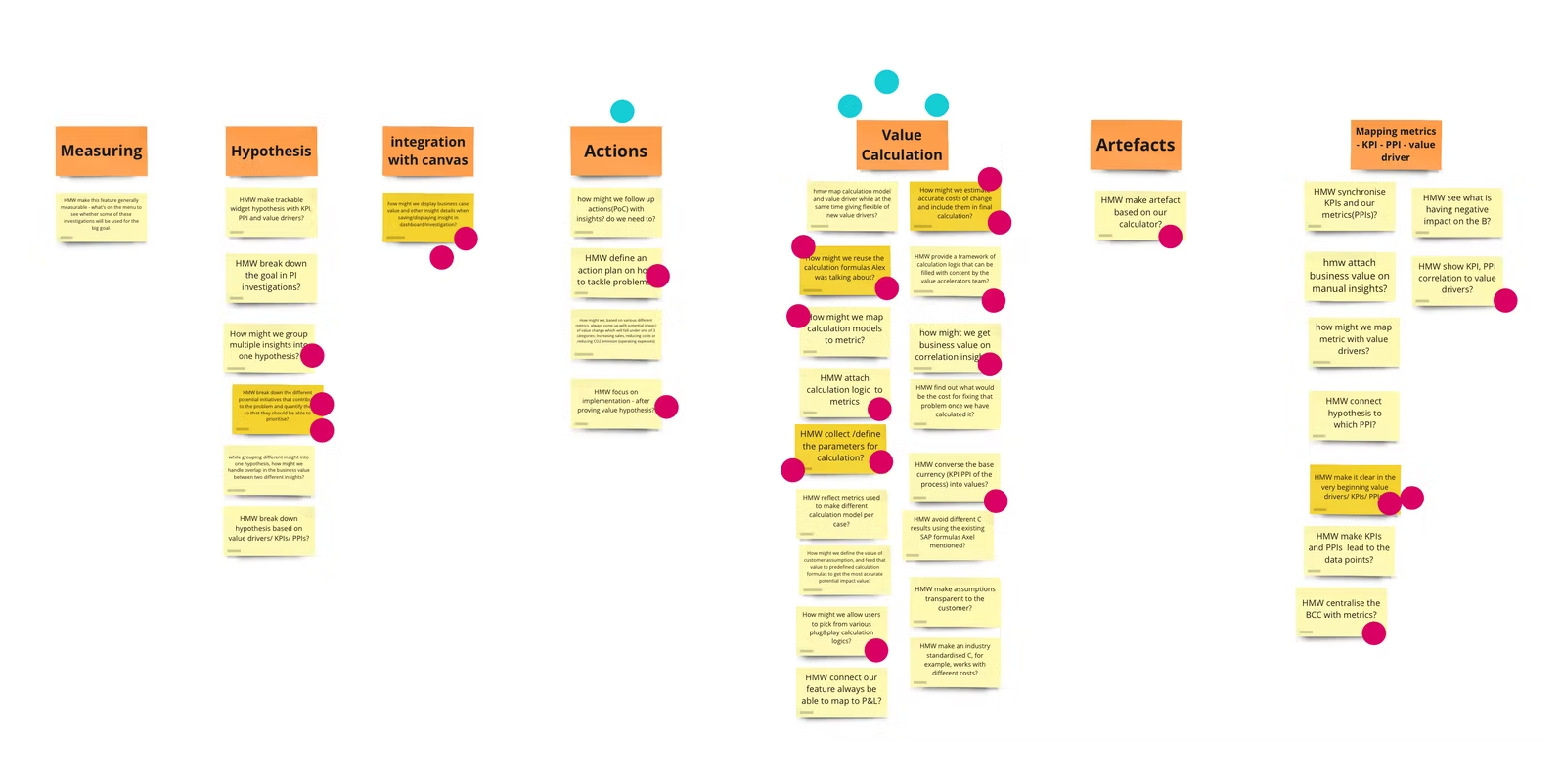
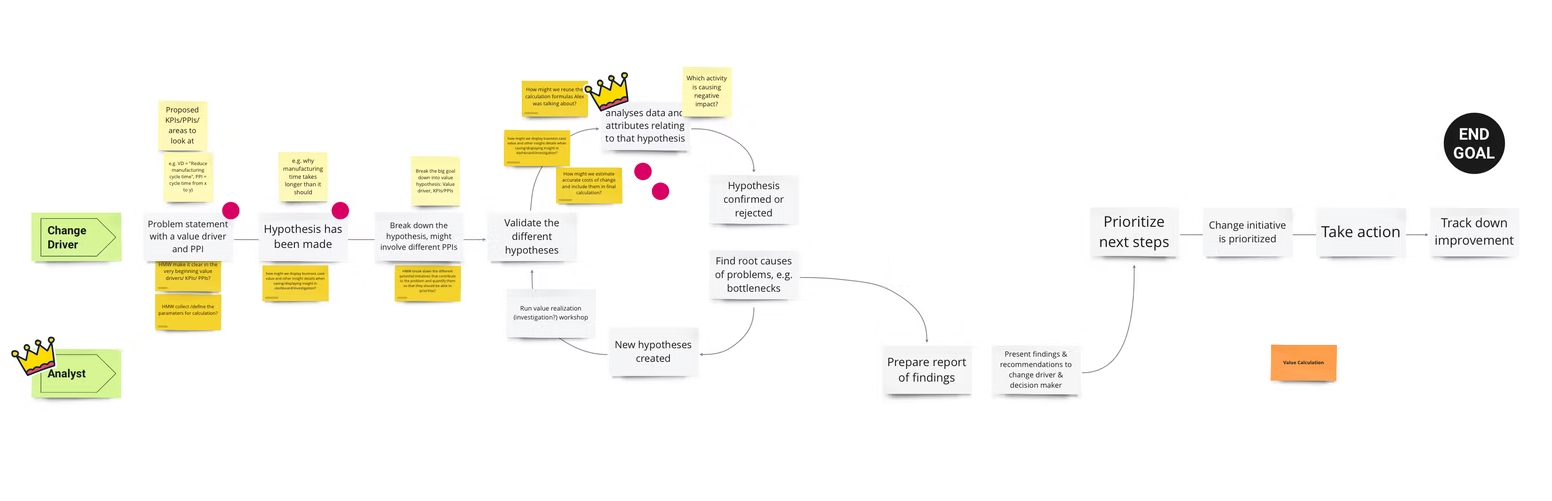
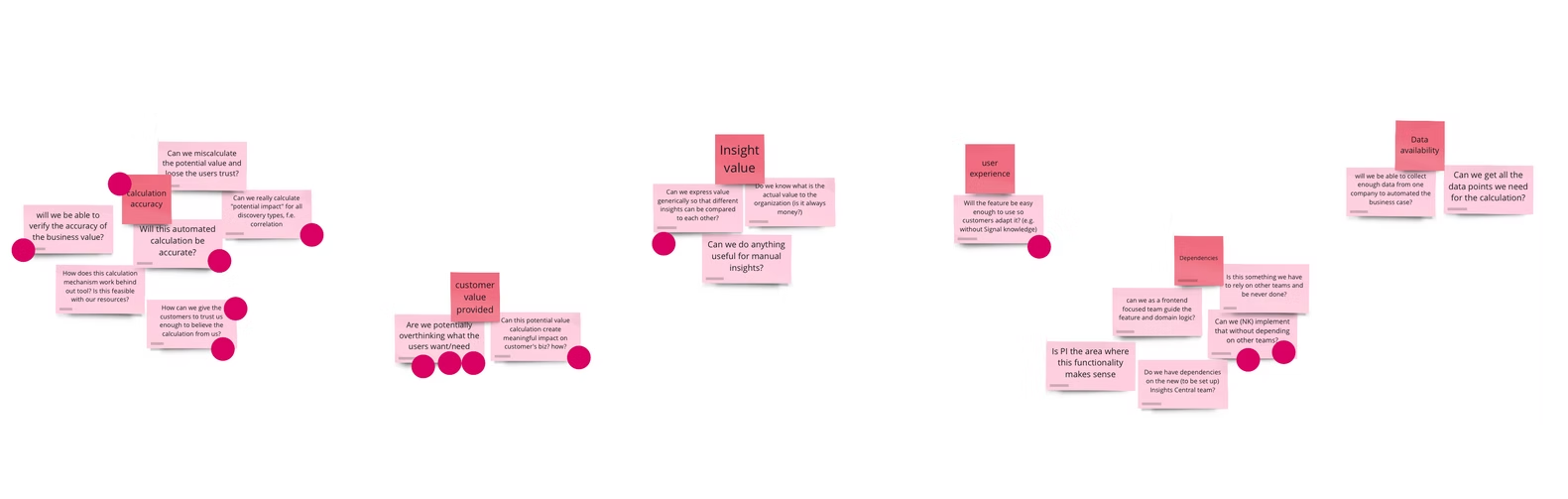
This work resulted in decision-grade artefacts — including a value map, end-to-end task flow, and storyboard — that aligned product, design, and engineering on a common mental model. As a result, the team converged quickly on a viable direction with clarity on interaction logic, system behavior, and information hierarchy.
This approach reduced early ambiguity, accelerated alignment, and created a clear foundation for prototyping and validation without downstream rework.
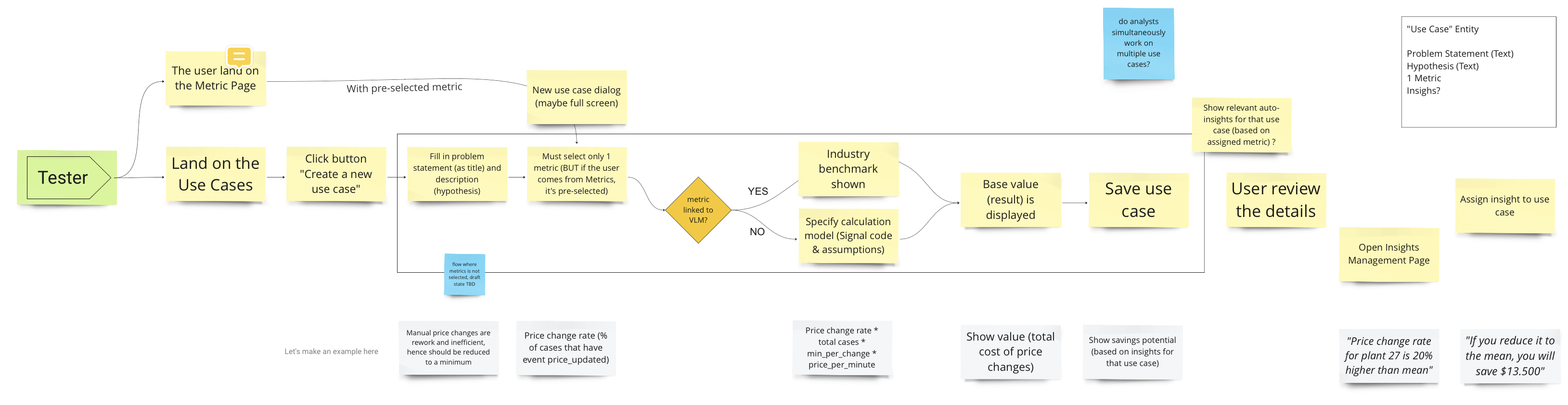
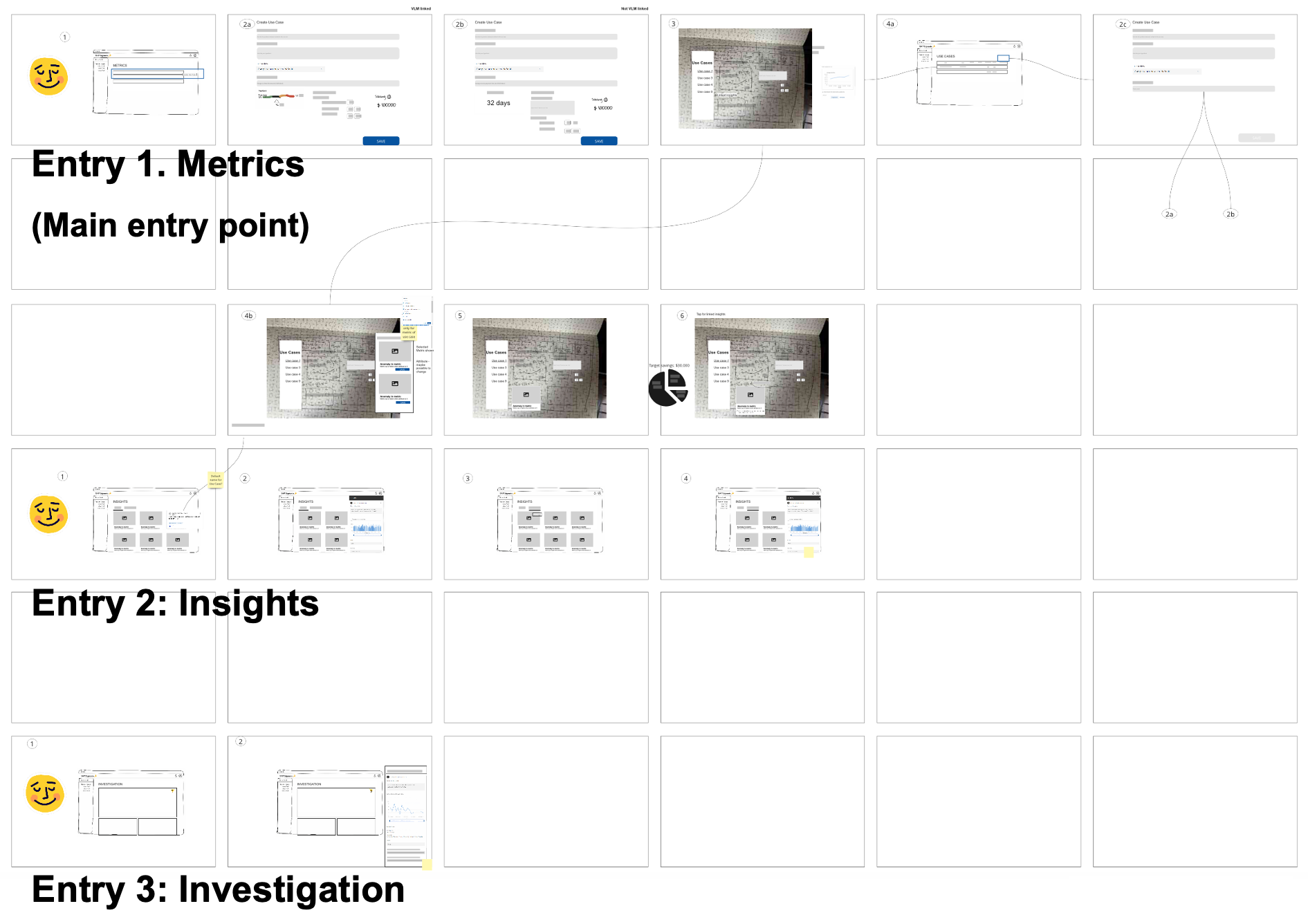
By introducing structure early, the process collapsed ambiguity and de-risked downstream execution. Teams aligned faster without sacrificing cross-functional signal, and the resulting framework proved reusable across subsequent initiatives.
Decisions accelerated when initiatives were framed as hypotheses rather than requirements. Quantified, projected value consistently outperformed qualitative conviction in driving prioritization. KPI metrics established a shared evaluation language across disciplines, while expressing impact in monetary terms reliably unlocked executive alignment.
- Lack of a shared definition of value was the primary source of early decision risk and slow alignment.
- Framing initiatives as testable hypotheses shifted conversations from opinion to evidence-based decision-making.
- Quantified, projected value enabled faster prioritization than qualitative arguments alone.
- KPI metrics created a common evaluation language across product, design, and engineering.
- Expressing impact in monetary terms consistently unlocked executive alignment and commitment.
- Early alignment on decision logic reduced downstream rework and de-risked prototyping and execution.
- Start with a clearly defined problem
Initiatives must be grounded in explicit problem statements to prevent solution-first thinking. - Treat solutions as testable hypotheses
Proposed initiatives are framed as hypotheses and require validation before further investment. - Prioritise measurable impact over intuition
Decisions are driven by projected value rather than anecdote or opinion. - Use process performance as the evaluation lens
PPIs are the primary mechanism for estimating and comparing impact. - Quantify value in business terms
Impact is quantified monetarily to enable prioritisation, trade-offs, and executive alignment.
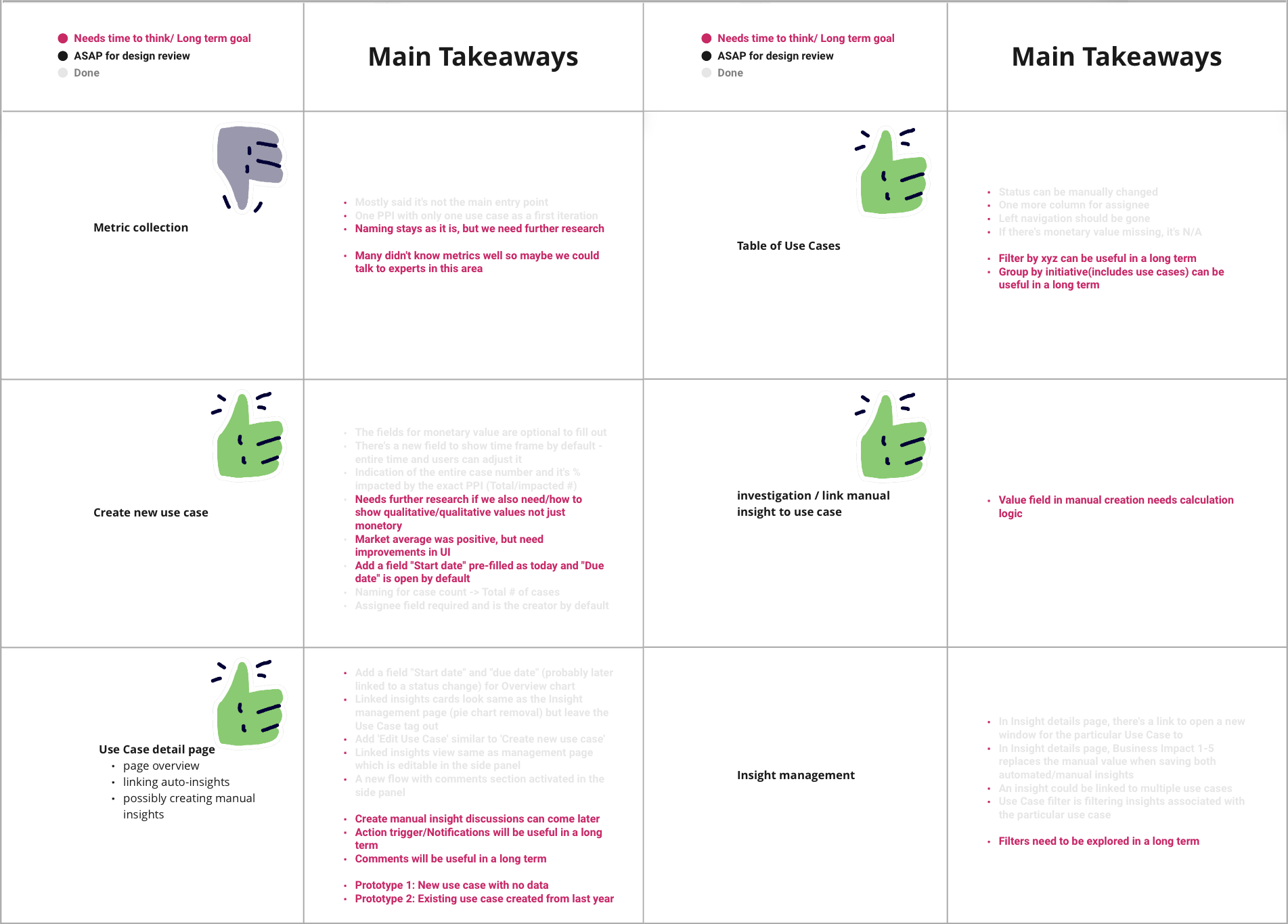
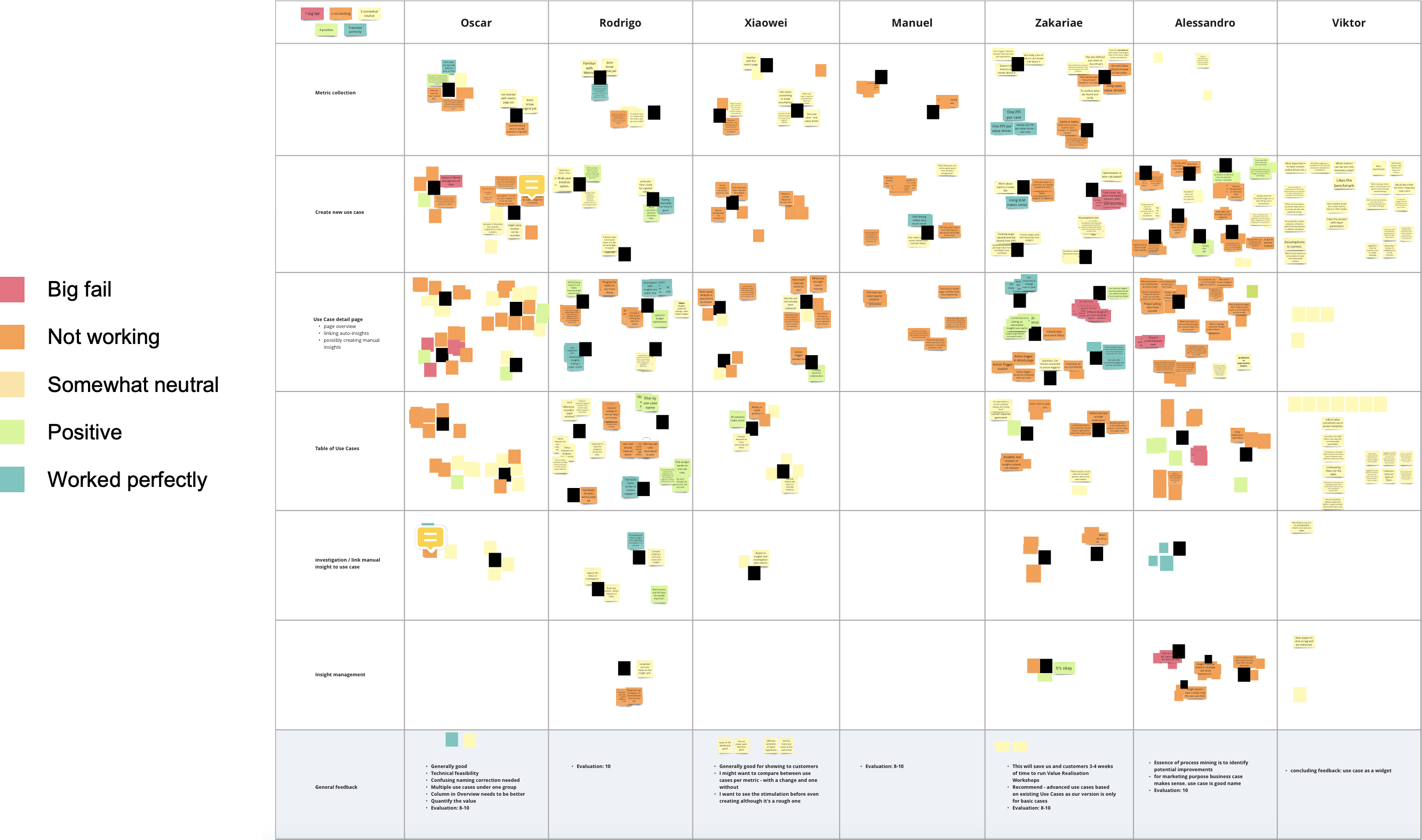
Early stage usability testing confirmed the design direction (8.8/10 average rating). Interview insights were synthesised across six feature areas to surface strengths, residual risks, and clear next steps for iteration.
Early-stage validation combined usability testing signals with structured team voting to drive fast, evidence-based decisions.
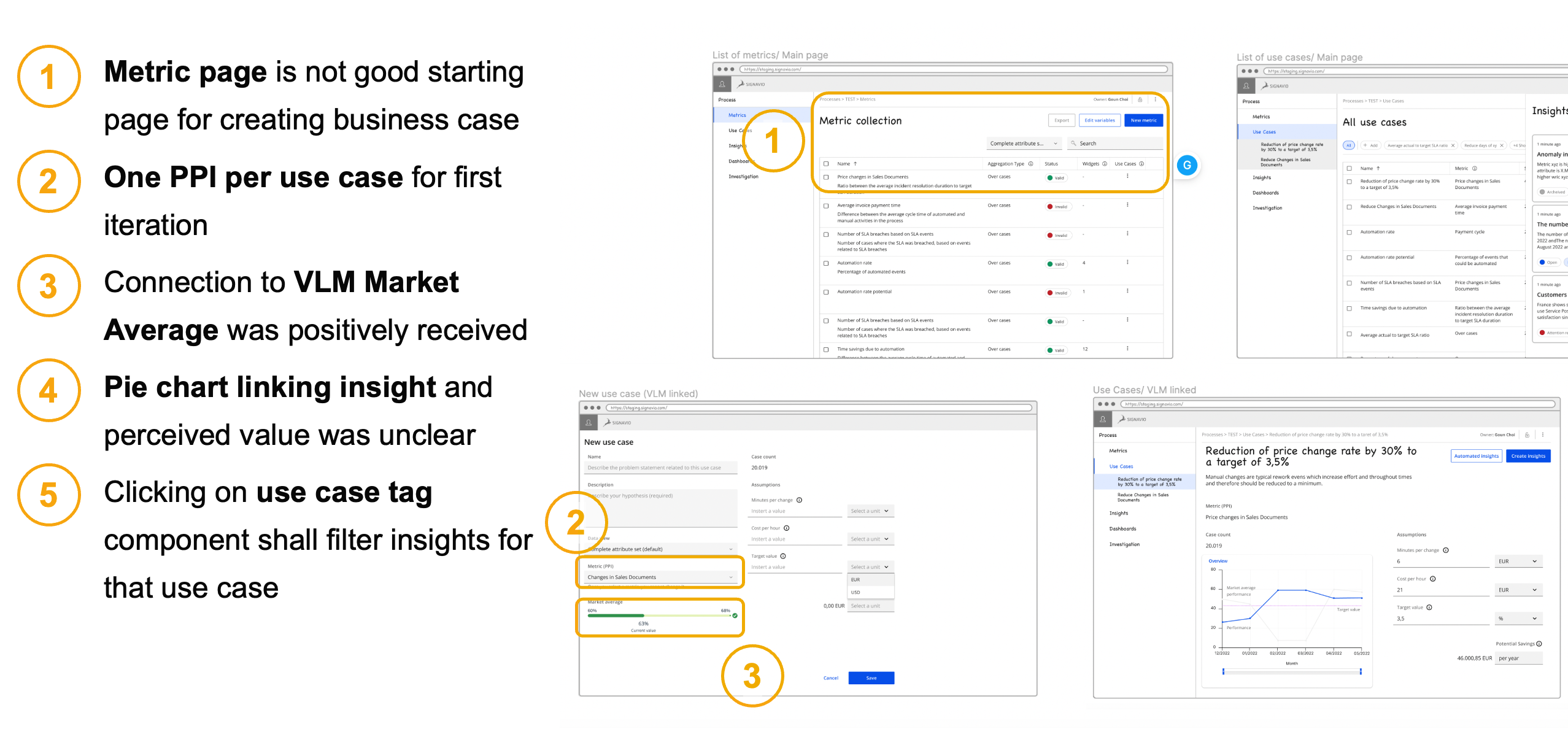
The majority of screens demonstrated sufficient clarity, value communication, and interaction viability to progress without rework. One exception was the entry point — consistent feedback indicated unclear intent and discoverability; this surface was intentionally paused for redesign before further investment.
This approach enabled rapid convergence on a validated direction, reduced downstream risk, and ensured forward momentum was driven by user evidence rather than assumption.
- Defined information architecture and core user flows to align on primary use cases before committing to detailed design.
- Validated the direction early through low-fidelity usability testing to de-risk key assumptions and interaction logic.
This approach established cross-functional confidence, surfaced risks early, and enabled faster progression into high-fidelity execution with minimal rework.
Design System Alignment
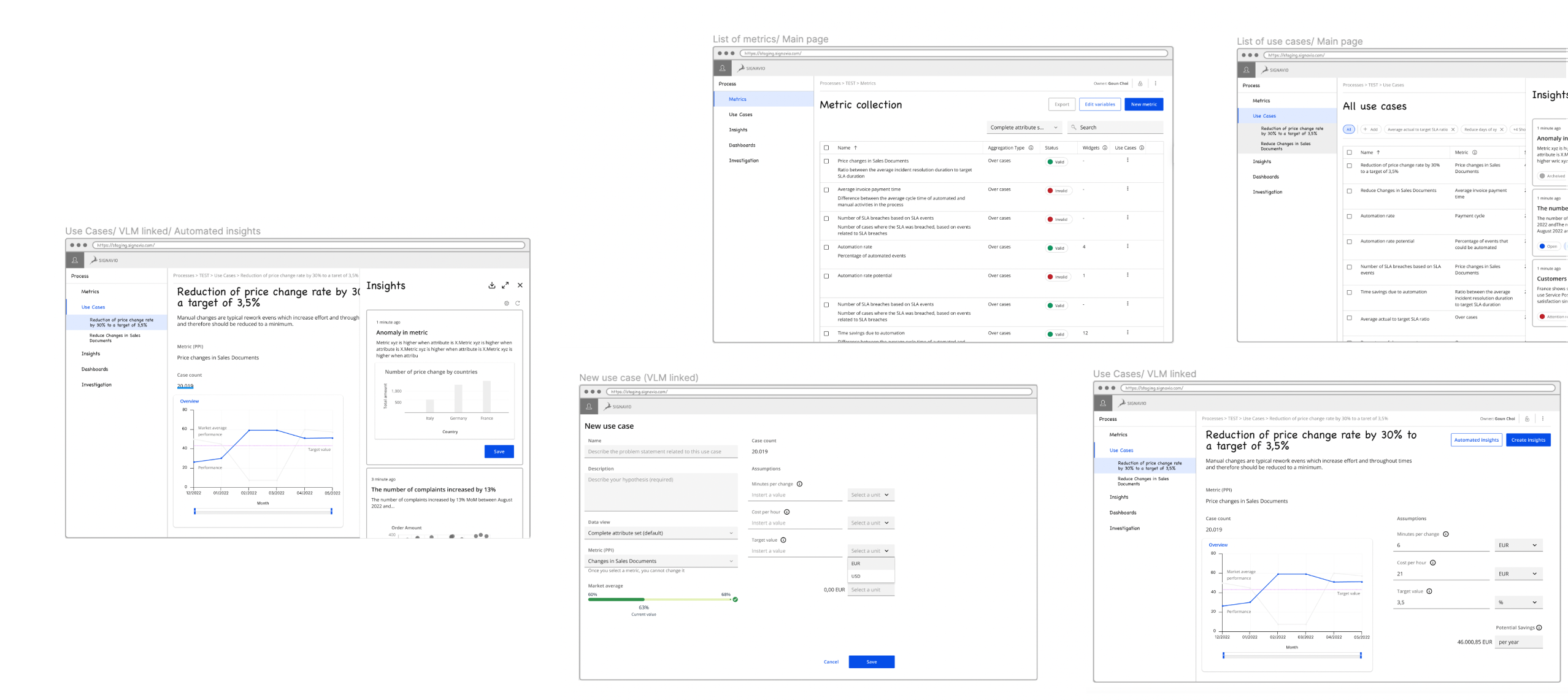
The solution was implemented using SAP Horizon components to ensure alignment with the evolving design system and reduce downstream engineering risk. To address unmet analytical requirements, I designed a new analytical table component and drove its inclusion in the Horizon extension library.
The component is now reused across multiple SAP products, contributing to long-term system scalability and design consistency.
- The capability is live in BETA, demonstrating production readiness and clear signals for suite-level adoption.
- Customer validation averaged 9.2/10 across key dimensions (usability, intuitiveness, perceived value, and overall satisfaction), confirming strong alignment with user needs and the design direction.
- Based on this validation, the Value Analysis model was scaled to the Signavio Suite, with other products adopting the same framework and interaction principles, establishing a shared approach to quantifying business impact across the platform.
- This reduced duplication of effort across teams and de-risked long-term investment by anchoring multiple product decisions to a validated, reusable value model.